
The Best Offensive Trio in Philadelphia Eagles History: 2004 vs 2013


Through the first two decades of the 2000s, the Birds have had a plethora of talent on the offensive end of the ball.
With offensive-minded coaches such as Andy Reid, Chip Kelly, and Doug Pederson, it was a must for the franchise to acquire elite skill-position players.
It’s an approach commonly seen across many NFL franchises today. Through history, triple threats consisting of a good quarterback, running back, and wide receiver have been a mismatch nightmare for opposing defenses.
The 49ers had one of the most notable trios in 1988 when the franchise obtained their third Super Bowl championship, led by hall-of-fame quarterback Joe Montana. Roger Craig and Jerry Rice were both named first-team all-pros, combining for 3,449 total yards and 20 touchdowns.
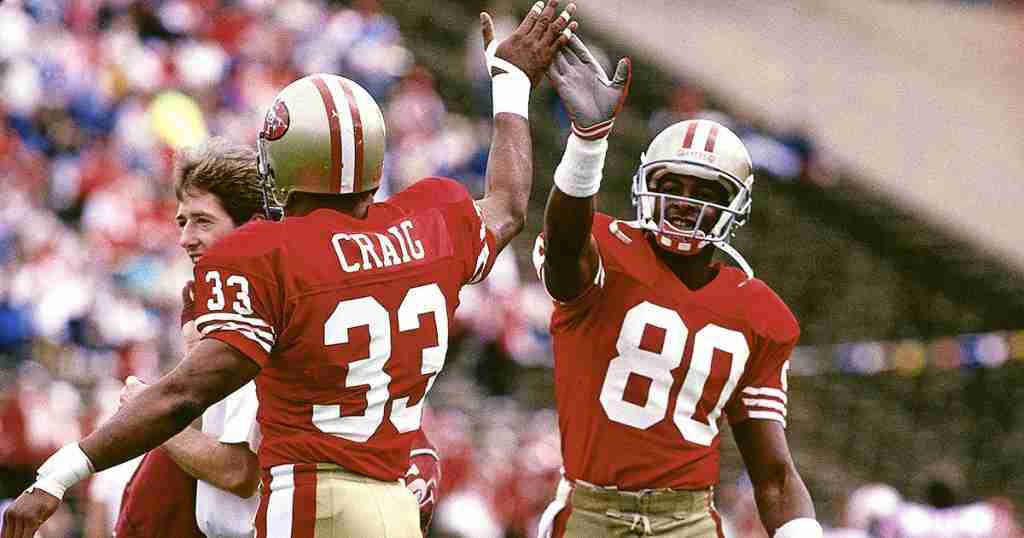
 Photo: San Francisco 49ers Twitter
In 1995, the Dallas Cowboys had hall-of-fame quarterback Troy Aikman command the duo of Michael Irvin and Emmitt Smith to combine for 3,751 total yards and 35 touchdowns while winning a championship in the process.
One of the more modern dominant trios that we’ve witnessed in the league took place in 2014 with the Pittsburgh Steelers. Antonio Brown and Le’Veon Bell combined for a total of 3,926 yards and 24 total touchdowns, which led to the duo being selected as first-team all-pros. Ben Roethlisberger threw for 4,952 and 32 touchdowns while being named to the 2014 pro bowl roster.
In a modern NFL landscape, offensive football is more prominent than ever. Establishing a quarterback around sensational talent is still present but with more variation in 2020. With the perennial athletes now lining up at tight end along with the resurgence of fullbacks, there are numerous ways to surround a team’s signal-caller.
Which trios helped the Philadelphia Eagles achieve offensive success over their 88 seasons?
Two of the more dominant trios through Eagles history happen to be more modern: the 2004 Philadelphia Eagles and the 2013 Philadelphia Eagles.
’04 Eagles: (QB D. McNabb, RB B. Westbrook, WR T. Owens)
- (13 – 3) record, NFC East Champions
- NFC Conference Champions
- Lost Super Bowl 39 (NE 24, PHI 21)
- 8th-ranked offense in scoring
- 9th-ranked offense in yardage
The Philadelphia Eagles failed to claim victory in the NFC Championship the three seasons prior: 2001, 2002, and 2003. With a need for more star power on offense, Andy Reid brought in Terell Owens.
Giving a young Donovan McNabb one of the best receivers in NFL history was a no-brainer. The tandem of McNabb and Owens, along with the versatile running back Brian Westbrook, created constant issues for opposing defenses. Westbrook’s versatility in the passing game allowed him to dominate underneath, perfectly complimenting Terell Owens across the middle.
Westbrook’s totals are more impressive upon review. While he failed to surpass 1,000 rushing yards, the Philly legend combined for a total of 1,515 yards and nine touchdowns in only thirteen games. If we were to pace his totals out over a sixteen-game season, his new totals would be 1,865 total yards and 11 touchdowns.
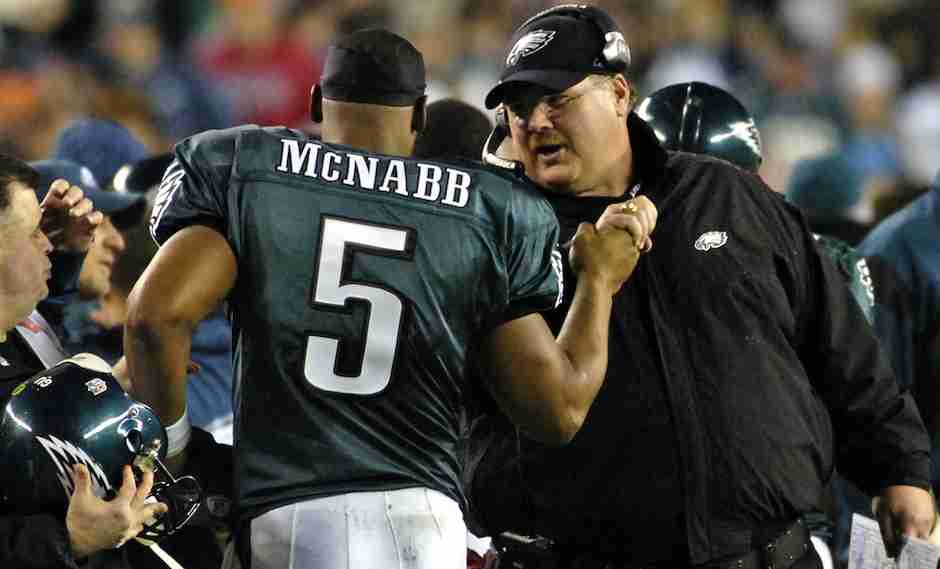
 Photo: PhillyMag.com
Donovan McNabb, being named to his fifth pro bowl in 2004, established himself as one of the NFL’s premier talents at quarterback. He threw for 3,875 passing yards and rushed for 220 yards. His 64% completion percentage and 34 total touchdowns in 2004 were career-highs for Number Five.
Terell Owens was unquestionably the most prolific talent among the 04′ Eagles trio. He received his fourth first-team all-pro honor with season totals of 77 receptions, 1,200 receiving yards, and 14 receiving touchdowns. Due to injury, Owens missed the last two games of the season, thus making his totals even more impressive.
This trio accomplished a substantial amount in just a short year. It is truly saddening for Philadelphia fans that these three athletes couldn’t have stuck together and won the Eagles franchise their first Super Bowl title. While they lacked longevity, their run in 2004 will be remembered for eternity.
’13 Eagles: (QB N. Foles, RB L. McCoy, WR D. Jackson)
- (10 – 6) record, NFC East Champions
- Loss in Wild Card (NO 26, PHI 24)
- 4th-ranked offense in points
- 2nd-ranked offense in yards
The story of the 2013 Philadelphia Eagles is a fun one. After only winning four games in 2012, Andy Reid’s fourteen-year stint in the midnight green was over. The Eagles weren’t shying away from their offensive-minded hiring tendencies with the firing of Andy Reid. Instead, they decided to keep the same philosophy with a more youthful touch.
Enter Chip Kelly, the hottest new thing from the college scene. Chip Kelly was determined to incorporate his college-style offense from Oregon into the NFL. While many claimed it wouldn’t last (they were correct), the instant impact it had was revolutionary.
The speed that the Philadelphia offense produced was unparalleled in 2013; no one could slow them down. They were so fast on-field that they were 31st in time-of-possession among all NFL teams.
DeSean Jackson, one of the NFL’s greatest deep threats in league history, was a huge contributor and reason as to why Philly thrived on offense in 2014. Jackson posted career-highs in receiving yards (1,332), receptions (82), and receiving touchdowns (9). The speedster also produced his most efficient season, tallying a career-high catch rate with 65%; an impressive share for a deep-threat.
LeSean McCoy’s 2013 campaign was arguably the greatest single-season performance from a Philadelphia running back in franchise history. McCoy rushed for 1,607 yards on 5.1 yards per attempt while catching 52 balls for 539 more yards through the air.
Along with his eleven total touchdowns, LeSean McCoy was the obvious choice for the first-team all-pro honor at running back in 2013; his second time receiving the award. The shifty running back’s 2,146 total yards is the Eagles franchise record for the most yards-from-scrimmage in single-season history, surpassing Brian Westbrook’s former total.
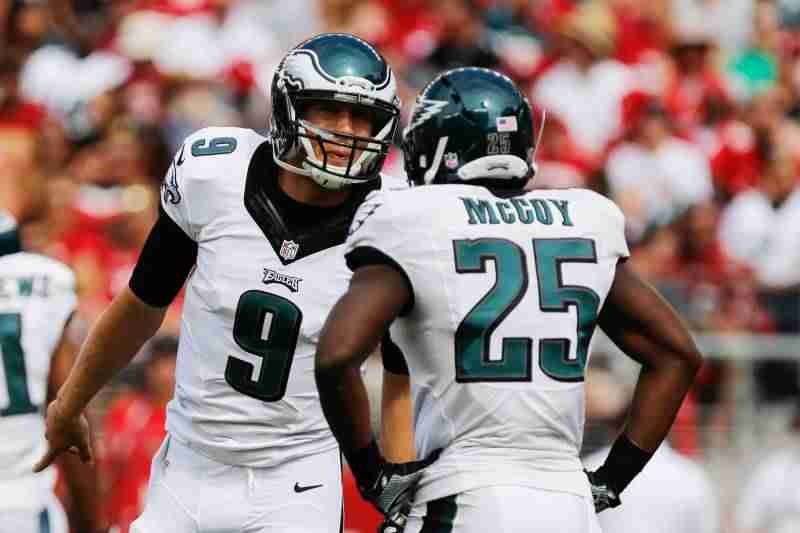
 Photo: Bleacher Report
While the season began with Michael Vick at the helm, an injury cut his season short. This pushed Nick Foles into the starting lineup; a move that came with low expectations. To Philly’s pleasant surprise, Foles produced one of the most efficient seasons in NFL history. Despite only starting 10 games in 2013, Foles was named to the pro bowl roster, and rightfully so.
In his 2013 campaign, Foles threw for an absurd touchdown-interception ratio of 27/2 on 64%. Had he played a full 16-game season, his totals would have been:
64% comp. – 4,134 passing yards – 38 passing touchdowns – 3 interceptions
Despite the first-round exit to Drew Brees and the Saints, Foles was able to lead the Birds to a record of 8-2.
2013 Nick Foles was certainly not a household quarterback at the time, but his effectiveness during that season was with some good company. His decision-making and strong-arm allowed him to thrive in Chip Kelly’s quick, vertical offense.
Which Trio Was More Effective in Their Time?
When trying to make an accurate comparison of total effectiveness between two units from different eras, it’s important to realize how they performed in relation to their season.
In 2004, Terell Owens was third in receiving touchdowns, Brian Westbrook was 11th in total yards-from-scrimmage, and Donovan McNabb was third in passing touchdowns while being 32nd-ranked in interceptions.
In 2013, DeSean Jackson was ninth in receiving yards, LeSean McCoy led the NFL in carries, rushing yards, and first downs rushing, and Nick Foles was eighth in passing touchdowns while being 48th-ranked in interceptions.
Each group can make a strong argument statistically and skillfully; however, the ’04 Eagles trio has to have the edge.
Terell Owens is undoubtedly a top-five wide receiver in NFL history. Pairing him with the already-existing tandem of Donovan McNabb and Brian Westbrook was a sure-fire decision.
Along with a well-executed coaching job by future-hall-of-fame coach Andy Reid, these three led the Birds to their second Super Bowl appearance in franchise history; a feat that cannot be overlooked.
LeSean McCoy’s 2013 campaign was definitively better than that of Westbrook’s in ’04, but the connection of Foles and Jackson just doesn’t compare to the deadly force of McNabb and Owens.
Thankfully for Eagles fans, the ultimatum between these two marvelous trios will never be a reality. We are able to look back on the magic that each of these two offenses created forever.
With a new decade beginning, the newcomers — Carson Wentz, Zach Ertz, and Miles Sanders — try to make their mark.
Could this trio surpass the prior totals set in 2020?
Featured Image: CBSSports
Discover more from Philadelphia Sports Nation
Subscribe to get the latest posts sent to your email.

Categorized:Eagles Unique Columns